Academic research & writing platform
Academic research & writing platform
Academic research & writing platform
The system connected the evidence.
The experience made that trail hard to follow.
The system connected the evidence.
The experience made that trail hard to follow.
The system connected the evidence.
The experience made that trail hard to follow.
The system connected the evidence.
The experience made that trail hard to follow.
I followed one Snippet, the platform’s unit of captured evidence, from its source through capture, routing and reuse to see where that trail became difficult to understand. I mapped the system behaviour behind those breaks, decided which parts of that logic users needed to see at each stage, and redesigned the workflow without changing the underlying evidence model.
Project Snapshot
Key area
Detail
Initial brief
Initial brief
Improve learnability and onboarding for first-time users
Scope
Scope
3-month commissioned study followed by a 2-month independent investigation
Users
Users
Students, academic staff and others producing evidence-based written work
Constraint
Constraint
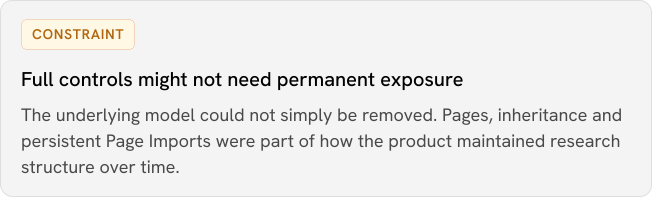
The underlying Snippet model and Page structures couldn't be substantially changed.
Evidence
Evidence
Moderated usability testing with 11 first-time users, thematic analysis, heuristic evaluation and system testing.
Validation
Validation
Prototype testing with [N] participants focused on [actual tasks/metrics]
My Role
My Role
My Role
My Role
Commissioned phase (with the product team)
Commissioned phase (with the product team)
Commissioned phase (with the product team)
Commissioned phase (with the product team)
Contributed to the synthesis and analysis of moderated usability sessions with 11 first-time users, helping identify the main breakdowns.
Contributed to the synthesis and analysis of moderated usability sessions with 11 first-time users, helping identify the main breakdowns.
Owned the Phase 1 flows and interaction concepts, working with the wider product and research team.
Owned the Phase 1 flows and interaction concepts, working with the wider product and research team.
Owned the Phase 1 flows and interaction concepts, working with the wider product and research team.
Owned the Phase 1 flows and interaction concepts, working with the wider product and research team.
Independent investigation (self-directed)
Independent investigation (self-directed)
Independent investigation (self-directed)
Independent investigation (self-directed)
Reproduced the platform’s behaviour and traced one Snippet across the core evidence workflow, from Capture through routing and reuse.
Reproduced the platform’s behaviour and traced one Snippet across the core evidence workflow, from Capture through routing and reuse.
Identified where hidden system states and Page relationships were breaking users’ understanding across the core workflow.
Identified where hidden system states and Page relationships were breaking users’ understanding across the core workflow.
Set the design criteria, explored alternative interaction models and owned the redesign across capture, routing and hierarchy navigation.
Set the design criteria, explored alternative interaction models and owned the redesign across capture, routing and hierarchy navigation.
Stress-tested the routing model against increasingly deep Page structures, leading to contextual re-rooting rather than restricting the existing hierarchy.
Stress-tested the routing model against increasingly deep Page structures, leading to contextual re-rooting rather than restricting the existing hierarchy.
About the platform
About the platform
About the platform
About the platform
The platform was built for university academics and students to capture research, organise it, and synthesise it directly into their writing. Instead of forcing people to switch between separate source materials, citation tools, and word processors, the product aimed to bring the entire evidence loop into one connected workspace.
The platform was built for university academics and students to capture research, organise it, and synthesise it directly into their writing. Instead of forcing people to switch between separate source materials, citation tools, and word processors, the product aimed to bring the entire evidence loop into one connected workspace.
The platform was built for university academics and students to capture research, organise it, and synthesise it directly into their writing. Instead of forcing people to switch between separate source materials, citation tools, and word processors, the product aimed to bring the entire evidence loop into one connected workspace.
The platform was built for university academics and students to capture research, organise it, and synthesise it directly into their writing. Instead of forcing people to switch between separate source materials, citation tools, and word processors, the product aimed to bring the entire evidence loop into one connected workspace.
📖 Read ──► 📥 Capture ──► 📂 Organise ──► 📝 Reuse
📖 Read ──► 📥 Capture ──► 📂 Organise ──► 📝 Reuse
📖 Read ──► 📥 Capture ──►
📂 Organise ──► 📝 Reuse
Its value came from keeping those activities connected. Evidence captured while reading could remain linked to its source, be organised for later use and eventually be reused when developing written work.
Its value came from keeping those activities connected. Evidence captured while reading could remain linked to its source, be organised for later use and eventually be reused when developing written work.
Its value came from keeping those activities connected. Evidence captured while reading could remain linked to its source, be organised for later use and eventually be reused when developing written work.
The Business Reality
The Business Reality
The Business Reality
The Business Reality
Short sessions created an activation and retention risk
Short sessions created an activation and retention risk
Short sessions created an activation and retention risk
Short sessions created an activation and retention risk
For a platform built around a connected research-to-writing workflow, short sessions created a clear activation risk: users could leave before experiencing the product’s core value of carrying evidence from reading into organisation and writing.
For a platform built around a connected research-to-writing workflow, short sessions created a clear activation risk: users could leave before experiencing the product’s core value of carrying evidence from reading into organisation and writing.
For a platform built around a connected research-to-writing workflow, short sessions created a clear activation risk: users could leave before experiencing the product’s core value of carrying evidence from reading into organisation and writing.
For a platform built around a connected research-to-writing workflow, short sessions created a clear activation risk: users could leave before experiencing the product’s core value of carrying evidence from reading into organisation and writing.
Average session duration
Average session duration
Average session duration
<15 mins
<15 mins
<15 mins
<15 mins
Average active time per session
Average active time per session
Average active time per session
4 mins
4 mins
4 mins
4 mins
The initial plan assumed the issue was limited to onboarding and proposed a surface level fix followed by a visual interface refresh. However before designing isolated onboarding screens I pushed to evaluate the end to end workflow. I structured the usability sessions around goal-oriented tasks to see where user momentum truly stalled.
The initial plan assumed the issue was limited to onboarding and proposed a surface level fix followed by a visual interface refresh. However before designing isolated onboarding screens I pushed to evaluate the end to end workflow. I structured the usability sessions around goal-oriented tasks to see where user momentum truly stalled.
The initial plan assumed the issue was limited to onboarding and proposed a surface level fix followed by a visual interface refresh. However before designing isolated onboarding screens I pushed to evaluate the end to end workflow. I structured the usability sessions around goal-oriented tasks to see where user momentum truly stalled.
What happened when we tested the core workflow
What happened when we tested the core workflow
What happened when we tested the core workflow
What happened when we tested the core workflow
To test that hypothesis we ran moderated usability sessions with 11 first-time users. These participants were university academics and students whose primary goal was to capture, organise and synthesise information directly into their writing. We observed them working through a realistic research scenario that moved from capturing evidence while reading to bringing it into a draft. Their progress revealed a clear break between Capture and reuse.
To test that hypothesis we ran moderated usability sessions with 11 first-time users. These participants were university academics and students whose primary goal was to capture, organise and synthesise information directly into their writing. We observed them working through a realistic research scenario that moved from capturing evidence while reading to bringing it into a draft. Their progress revealed a clear break between Capture and reuse.
To test that hypothesis we ran moderated usability sessions with 11 first-time users. These participants were university academics and students whose primary goal was to capture, organise and synthesise information directly into their writing. We observed them working through a realistic research scenario that moved from capturing evidence while reading to bringing it into a draft. Their progress revealed a clear break between Capture and reuse.
9 / 11
9 / 11
9 / 11
9 / 11
Managed to complete Capture
Managed to complete Capture
Managed to complete Capture
2 / 11
2 / 11
2 / 11
2 / 11
Progressed to importing evidence into writing
Progressed to importing evidence into writing
Progressed to importing evidence into writing
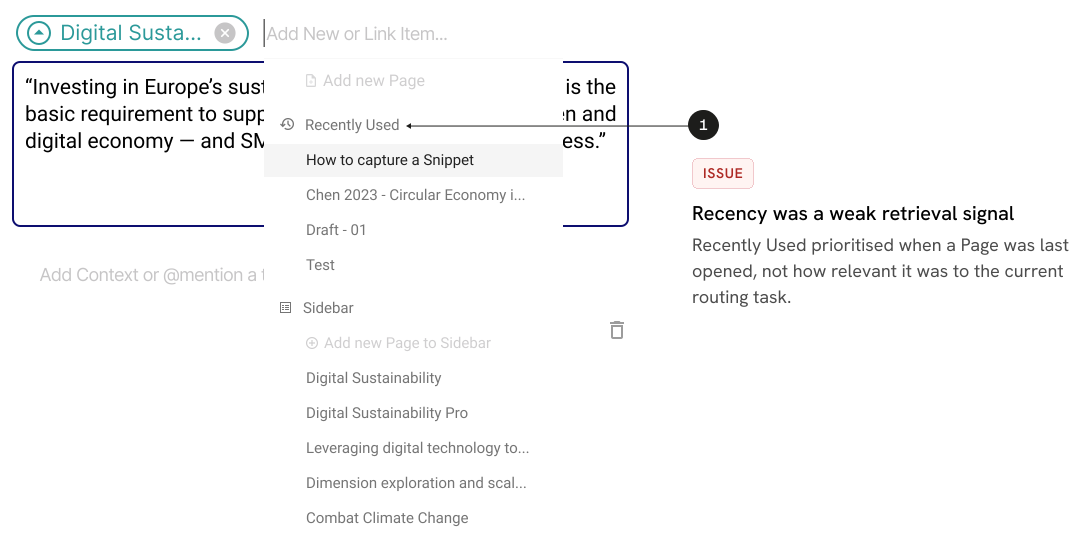
Existing Capture flow showing where uncertainty begins after the Snippet is created.
Existing Capture flow showing where uncertainty begins after the Snippet is created.
Most participants eventually got through Capture, but the interaction remained unclear. They questioned whether the Snippet had been saved, what “Add New or Link Item” meant, and where captured evidence
would live.
Most participants eventually got through Capture, but the interaction remained unclear. They questioned whether the Snippet had been saved, what “Add New or Link Item” meant, and where captured evidence would live.
Most participants eventually got through Capture, but the interaction remained unclear. They questioned whether the Snippet had been saved, what “Add New or Link Item” meant, and where captured evidence would live.
It seems like my comments are not actually being saved or edited somewhere. Where do they live?
It seems like my comments are not actually being saved or edited somewhere. Where do they live?
It seems like my comments are not actually being saved or edited somewhere. Where do they live?
— Participant 06
— Participant 06
— Participant 06
I captured this but can't pull it into writing.
I captured this but can't pull it into writing.
I captured this but can't pull it into writing.
— Participant 11
— Participant 11
— Participant 11
These were not isolated interface questions. Participants were struggling to carry an understanding of their evidence forward through the workflow.
The study also had a limit. Because most participants stalled before the later stages, Import and Page-relationship behaviour was not meaningfully tested. I knew where understanding was breaking, but not yet why the system behaved that way.
These were not isolated interface questions. Participants were struggling to carry an understanding of their evidence forward through the workflow.
The study also had a limit. Because most participants stalled before the later stages, Import and Page-relationship behaviour was not meaningfully tested. I knew where understanding was breaking, but not yet why the system behaved that way.
These were not isolated interface questions. Participants were struggling to carry an understanding of their evidence forward through the workflow.
The study also had a limit. Because most participants stalled before the later stages, Import and Page-relationship behaviour was not meaningfully tested. I knew where understanding was breaking, but not yet why the system behaved that way.
Investigating the system before changing the behaviour
Investigating the system before changing the behaviour
Investigating the system before changing the behaviour
Investigating the system before changing the behaviour
To understand why the system behaved this way, I needed to look beyond the interface. I mapped what happened to a Snippet from the exact moment it was captured, all the way to the point where it could be reused in writing.
Two objects were central to that workflow. A Snippet was a reusable piece of evidence captured from a source and kept linked to where it came from. A Page could be used to organise that evidence or as a place to write. The same Snippet could be associated with more than one Page, allowing evidence captured in one context to be reused elsewhere.
To understand why the system behaved this way, I needed to look beyond the interface. I mapped what happened to a Snippet from the exact moment it was captured, all the way to the point where it could be reused in writing.
Two objects were central to that workflow. A Snippet was a reusable piece of evidence captured from a source and kept linked to where it came from. A Page could be used to organise that evidence or as a place to write. The same Snippet could be associated with more than one Page, allowing evidence captured in one context to be reused elsewhere.
To understand why the system behaved this way, I needed to look beyond the interface. I mapped what happened to a Snippet from the exact moment it was captured, all the way to the point where it could be reused in writing.
Two objects were central to that workflow. A Snippet was a reusable piece of evidence captured from a source and kept linked to where it came from. A Page could be used to organise that evidence or as a place to write. The same Snippet could be associated with more than one Page, allowing evidence captured in one context to be reused elsewhere.

The map clarified an important distinction. Capture worked at the level of an individual Snippet, while reuse could happen at the level of a Page containing multiple Snippets. A Snippet was saved first, could optionally be associated with another Page, and later become available for writing when evidence from that Page was imported.
The map clarified an important distinction. Capture worked at the level of an individual Snippet, while reuse could happen at the level of a Page containing multiple Snippets. A Snippet was saved first, could optionally be associated with another Page, and later become available for writing when evidence from that Page was imported.
The map clarified an important distinction. Capture worked at the level of an individual Snippet, while reuse could happen at the level of a Page containing multiple Snippets. A Snippet was saved first, could optionally be associated with another Page, and later become available for writing when evidence from that Page was imported.
Three distinct moments of friction
Three distinct moments of friction
Three distinct moments of friction
Three distinct moments of friction
While the platform was designed around a seamless research-to-writing loop, tracing the evidence showed that friction was breaking the journey across three key moments:
While the platform was designed around a seamless research-to-writing loop, tracing the evidence showed that friction was breaking the journey across three key moments:
While the platform was designed around a seamless research-to-writing loop, tracing the evidence showed that friction was breaking the journey across three key moments:
01
01
01
01
Capture
Capture
Capture
Capture
Save evidence without interrupting the reading flow.
Save evidence without interrupting the reading flow.
Save evidence without interrupting the reading flow.
02
02
02
02
Route
Route
Route
Route
Find the right destination for a snippet as the workspace grows.
Find the right destination for a snippet as the workspace grows.
Find the right destination for a snippet as the workspace grows.
03
03
03
03
Organise
Organise
Organise
Organise
Understand how snippets and pages are connected.
Understand how snippets and pages are connected.
Understand how snippets and pages are connected.
These were not three isolated interface problems. They were connected by the same underlying Snippet and Page model, so changing one part of the workflow could affect what happened later.
These were not three isolated interface problems. They were connected by the same underlying Snippet and Page model, so changing one part of the workflow could affect what happened later.
These were not three isolated interface problems. They were connected by the same underlying Snippet and Page model, so changing one part of the workflow could affect what happened later.
01/03
Capture without interruption
When a user selected evidence and pressed Capture, the Snippet was already created and associated with the current Page. The popover that followed was therefore not required to complete Capture. It gave the user additional options to edit the Snippet or associate it with another Page.
The interface however did not communicate that state clearly. The design appeared to assume that researchers should organise evidence immediately while their memory was fresh or it simply lacked a better local control to assign a snippet to a page. Because the routing field received immediate attention there was little visible confirmation that the original capture task had already succeeded. As a result saving evidence and deciding where else it should belong could feel like one continuous requirement.
When a user selected evidence and pressed Capture, the Snippet was already created and associated with the current Page. The popover that followed was therefore not required to complete Capture. It gave the user additional options to edit the Snippet or associate it with another Page.
The interface however did not communicate that state clearly. The design appeared to assume that researchers should organise evidence immediately while their memory was fresh or it simply lacked a better local control to assign a snippet to a page. Because the routing field received immediate attention there was little visible confirmation that the original capture task had already succeeded. As a result saving evidence and deciding where else it should belong could feel like one continuous requirement.

It prompts me to add a new page or link an item, but I am not sure why I would need to do that at this point.
It prompts me to add a new page or link an item, but I am not sure why I would need to do that at this point.
It prompts me to add a new page or link an item, but I am not sure why I would need to do that at this point.
— Participant 04
— Participant 04
— Participant 04
For someone reading and collecting evidence, the immediate task was much simpler: I found something useful. Don’t let me lose it. The interface was introducing an organisational decision before making that first task feel complete.
For someone reading and collecting evidence, the immediate task was much simpler: I found something useful. Don’t let me lose it. The interface was introducing an organisational decision before making that first task feel complete.
For someone reading and collecting evidence, the immediate task was much simpler: I found something useful. Don’t let me lose it. The interface was introducing an organisational decision before making that first task feel complete.
Why not just remove routing?
Why not just remove routing?
That was the obvious direction at first. If Page assignment was interrupting Capture, removing it would make the interaction considerably simpler.
But the system map showed why that decision was not so straightforward. Associating a Snippet with another Page was one of the ways evidence could be organised for later reuse. It also happened at a useful moment, while the source and meaning of that evidence were still fresh in the user’s mind.
So there were two legitimate needs competing for the same moment.
That was the obvious direction at first. If Page assignment was interrupting Capture, removing it would make the interaction considerably simpler.
But the system map showed why that decision was not so straightforward. Associating a Snippet with another Page was one of the ways evidence could be organised for later reuse. It also happened at a useful moment, while the source and meaning of that evidence were still fresh in the user’s mind.
So there were two legitimate needs competing for the same moment.
That was the obvious direction at first. If Page assignment was interrupting Capture, removing it would make the interaction considerably simpler.
But the system map showed why that decision was not so straightforward. Associating a Snippet with another Page was one of the ways evidence could be organised for later reuse. It also happened at a useful moment, while the source and meaning of that evidence were still fresh in the user’s mind.
So there were two legitimate needs competing for the same moment.
During reading
During reading
During reading
Capture should be quick enough that users can preserve evidence and continue.
Capture should be quick enough that users can preserve evidence and continue.
Capture should be quick enough that users can preserve evidence and continue.
Vs
Vs
For later reuse
For later reuse
For later reuse
The platform still benefits from giving users an opportunity to organise that evidence while its context is fresh.
The platform still benefits from giving users an opportunity to organise that evidence while its context is fresh.
The platform still benefits from giving users an opportunity to organise that evidence while its context is fresh.
The problem was therefore no longer whether routing should exist. It was how much attention routing should demand during Capture.
The problem was therefore no longer whether routing should exist. It was how much attention routing should demand during Capture.
The problem was therefore no longer whether routing should exist. It was how much attention routing should demand during Capture.
DESIGN TENSION
DESIGN TENSION
Capture needs to feel complete and lightweight, while routing needs to remain available without feeling mandatory.
Capture needs to feel complete and lightweight, while routing needs to remain available without feeling mandatory.
This became the principle I used to evaluate the interaction rather than starting with a preferred UI.
This became the principle I used to evaluate the interaction rather than starting with a preferred UI.
This became the principle I used to evaluate the interaction rather than starting with a preferred UI.
Translating cognitive requirements into design criteria
Translating cognitive requirements into design criteria
For a researcher deep in a reading session every interface decision steals focus away from the actual text. To resolve the tension between quick capture and optional routing I had to design for the user's cognitive limits.
Instead of starting with UI elements I defined exactly what the researcher must perceive and know during this interaction. Before exploring alternatives I set four cognitive criteria for the Capture experience
For a researcher deep in a reading session every interface decision steals focus away from the actual text. To resolve the tension between quick capture and optional routing I had to design for the user's cognitive limits.
Instead of starting with UI elements I defined exactly what the researcher must perceive and know during this interaction. Before exploring alternatives I set four cognitive criteria for the Capture experience
For a researcher deep in a reading session every interface decision steals focus away from the actual text. To resolve the tension between quick capture and optional routing I had to design for the user's cognitive limits.
Instead of starting with UI elements I defined exactly what the researcher must perceive and know during this interaction. Before exploring alternatives I set four cognitive criteria for the Capture experience

Users should know Capture is complete before deciding what happens next.
Users should know Capture is complete before deciding what happens next.
Users should know Capture is complete before deciding what happens next.
Saving evidence should not require another decision.
Saving evidence should not require another decision.
Saving evidence should not require another decision.
Users who know where evidence belongs can route it while context is fresh.
Users who know where evidence belongs can route it while context is fresh.
Users who know where evidence belongs can route it while context is fresh.
Notes and routing remain available without appearing required.
Notes and routing remain available without appearing required.
Notes and routing remain available without appearing required.
Exploring the interaction model
Exploring the interaction model
Exploring the interaction model
With those criteria in place, I explored how much the Capture surface should ask users to do after the Snippet had already been saved.
With those criteria in place, I explored how much the Capture surface should ask users to do after the Snippet had already been saved.
With those criteria in place, I explored how much the Capture surface should ask users to do after the Snippet had already been saved.
Exploration 01
Exploration 01
Exploration 01
Separate completion from what happens next
Separate completion from what happens next
Separate completion from what happens next

Exploration 02
Exploration 02
Exploration 02
Give routing comparable presence
Give routing comparable presence
Give routing comparable presence
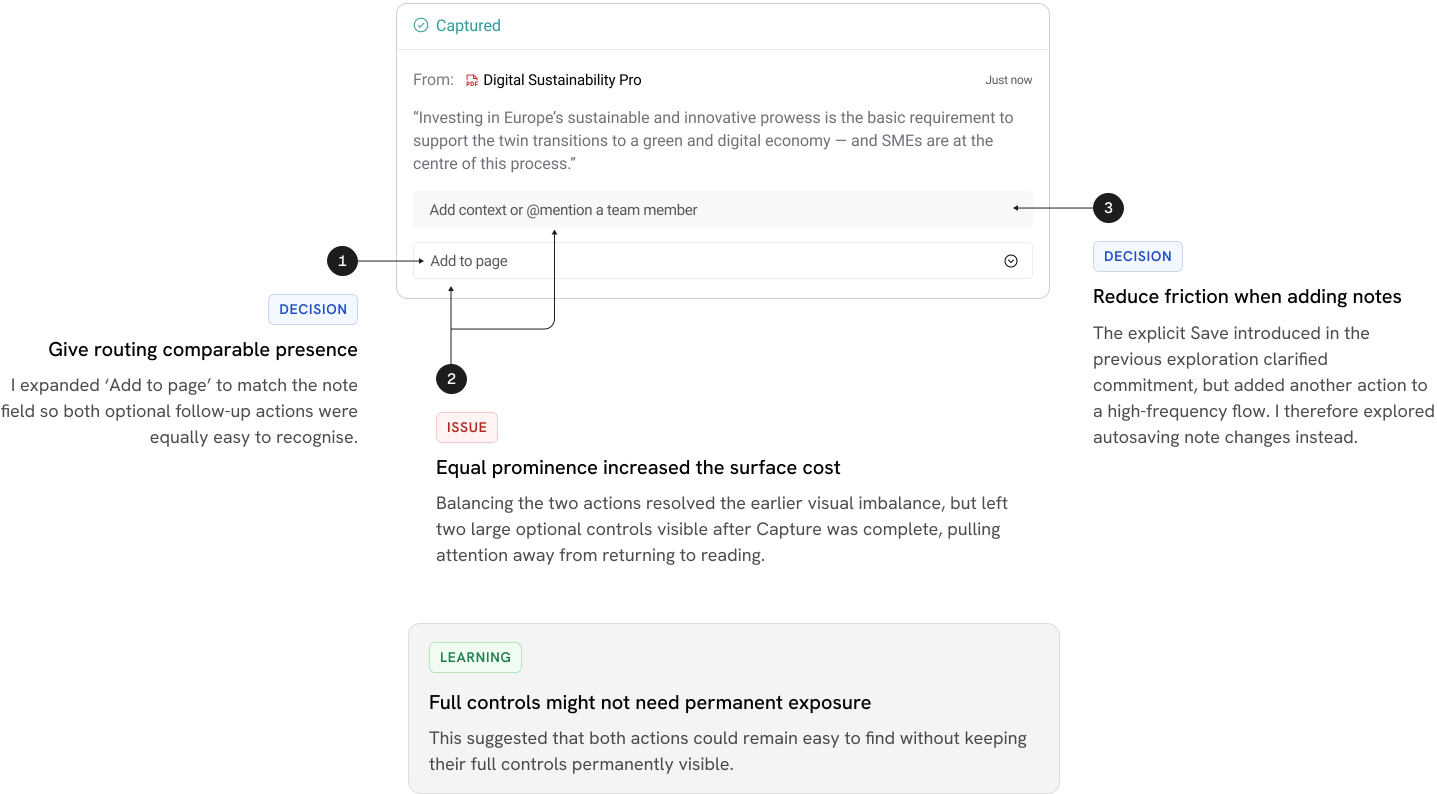
Exploration 03
Exploration 03
Exploration 03
Keep optional actions available on demand
Keep optional actions available on demand
Keep optional actions available on demand

A different interaction model
A different interaction model
A different interaction model
The first three explorations changed what the popover contained, but they all retained the same assumption, that Capture should open one. I tested a different model to see whether success could be confirmed without interrupting the reading flow, while keeping organisation available when needed.
The first three explorations changed what the popover contained, but they all retained the same assumption, that Capture should open one. I tested a different model to see whether success could be confirmed without interrupting the reading flow, while keeping organisation available when needed.
The first three explorations changed what the popover contained, but they all retained the same assumption, that Capture should open one. I tested a different model to see whether success could be confirmed without interrupting the reading flow, while keeping organisation available when needed.
Confirm Capture, then get out of the way
Confirm Capture, then get out of the way
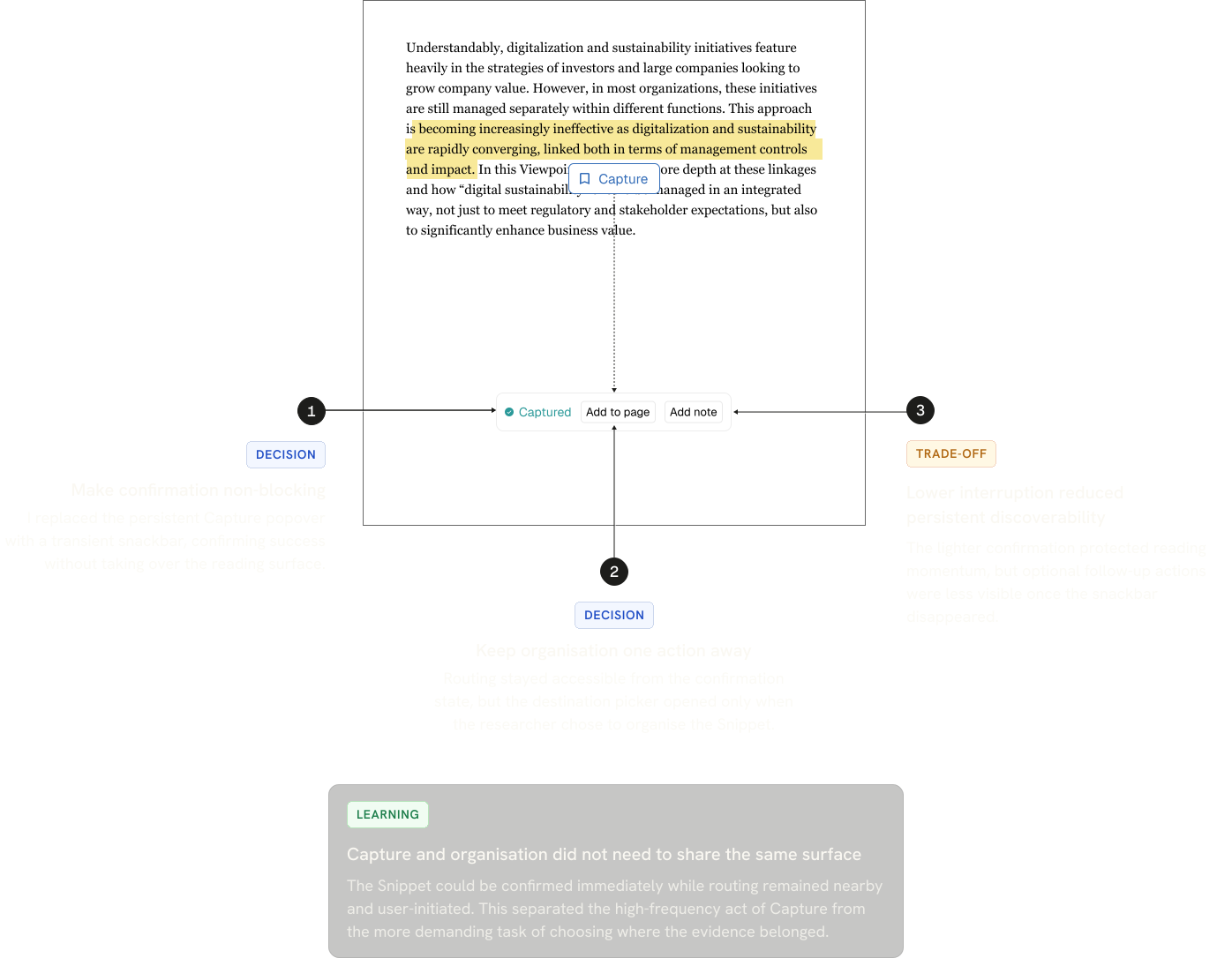
I carried this model forward because it gave Capture a clear completion point while preserving immediate access to routing and reducing the repeated interaction cost.
I carried this model forward because it gave Capture a clear completion point while preserving immediate access to routing and reducing the repeated interaction cost.
I carried this model forward because it gave Capture a clear completion point while preserving immediate access to routing and reducing the repeated interaction cost.
02/03
Route to the right destination
Separating routing from Capture made 'Add to page' a deliberate action rather than part of completing Capture. I then examined the destination picker itself to understand what happened when someone actually chose to organise a Snippet.
Separating routing from Capture made 'Add to page' a deliberate action rather than part of completing Capture. I then examined the destination picker itself to understand what happened when someone actually chose to organise a Snippet.
Separating routing from Capture made 'Add to page' a deliberate action rather than part of completing Capture. I then examined the destination picker itself to understand what happened when someone actually chose to organise a Snippet.

How I first approached retrieval
I started by asking how the way someone finds a destination might change based on their current research goal and their memory of the workspace. From this I formed a working model.
I started by asking how the way someone finds a destination might change based on their current research goal and their memory of the workspace. From this I formed a working model.
I started by asking how the way someone finds a destination might change based on their current research goal and their memory of the workspace. From this I formed a working model.
Exact recall
Exact recall
Exact recall
"I know exactly what I’m looking for.”
"I know exactly what I’m looking for.”
"I know exactly what I’m looking for.”
If the user is actively building structure and remembers the Page name or author, Search offers the quickest route
If the user is actively building structure and remembers the Page name or author, Search offers the quickest route
If the user is actively building structure and remembers the Page name or author, Search offers the quickest route
→ SEARCH
→ SEARCH
Partial recall
Partial recall
Partial recall
"I remember something about it."
"I remember something about it."
"I remember something about it."
If the exact destination is unclear but the topic or source context is known, surfacing likely options helps the user recognise the right Page.
If the exact destination is unclear but the topic or source context is known, surfacing likely options helps the user recognise the right Page.
If the exact destination is unclear but the topic or source context is known, surfacing likely options helps the user recognise the right Page.
→ SUGGESTED
→ SUGGESTED
No usable recall
No usable recall
No usable recall
“I don’t know what to search for.”
“I don’t know what to search for.”
“I don’t know what to search for.”
If the user does not have a specific destination in mind they need to browse the surrounding context and progressively locate or create a home for the evidence.
If the user does not have a specific destination in mind they need to browse the surrounding context and progressively locate or create a home for the evidence.
If the user does not have a specific destination in mind they need to browse the surrounding context and progressively locate or create a home for the evidence.
→ BROWSE / ALL LOCATION
→ BROWSE / ALL LOCATION
WORKING HYPOTHESIS
WORKING HYPOTHESIS
As recall became weaker, the picker should progressively shift from direct
search → recognition → navigation.
As recall became weaker, the picker should progressively shift from direct
search → recognition → navigation.
I used this as a working model to guide the first explorations.
I used this as a working model to guide the first explorations.
I used this as a working model to guide the first explorations.
What could someone actually remember?
What could someone actually remember?
If the first model depended on recall, I needed to understand what someone might actually remember when trying to relocate a Page. I mapped every cue the platform could potentially use, from Page names and source details to citation metadata and content inside files.
If the first model depended on recall, I needed to understand what someone might actually remember when trying to relocate a Page. I mapped every cue the platform could potentially use, from Page names and source details to citation metadata and content inside files.
If the first model depended on recall, I needed to understand what someone might actually remember when trying to relocate a Page. I mapped every cue the platform could potentially use, from Page names and source details to citation metadata and content inside files.
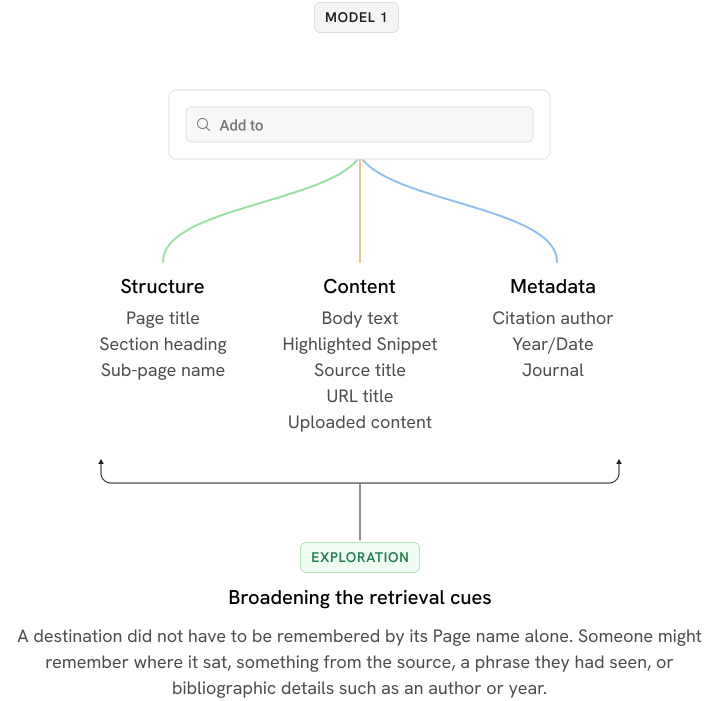
Not every useful cue belonged in Search
Not every useful cue belonged in Search
Mapping the cues showed how much information the platform could potentially use for retrieval. But the destination picker had a much narrower job, i.e. help someone choose a Page to route the Snippet to.
Mapping the cues showed how much information the platform could potentially use for retrieval. But the destination picker had a much narrower job, i.e. help someone choose a Page to route the Snippet to.
Mapping the cues showed how much information the platform could potentially use for retrieval. But the destination picker had a much narrower job, i.e. help someone choose a Page to route the Snippet to.

This kept Search focused. A Page could still be found from an incomplete title or remembered source information, without turning a small routing interaction into a search across every heading, paragraph, Snippet and uploaded document.
This kept Search focused. A Page could still be found from an incomplete title or remembered source information, without turning a small routing interaction into a search across every heading, paragraph, Snippet and uploaded document.
This kept Search focused. A Page could still be found from an incomplete title or remembered source information, without turning a small routing interaction into a search across every heading, paragraph, Snippet and uploaded document.
Exploring citation-led search
Exploring citation-led search
Exploring citation-led search
Citation metadata was the less straightforward case. A user might remember a source through an author, year or journal rather than its title. If those details identified a selectable source Page, they could still be useful for destination Search.
I initially explored whether citation should therefore become a separate search mode.
Citation metadata was the less straightforward case. A user might remember a source through an author, year or journal rather than its title. If those details identified a selectable source Page, they could still be useful for destination Search.
I initially explored whether citation should therefore become a separate search mode.
Citation metadata was the less straightforward case. A user might remember a source through an author, year or journal rather than its title. If those details identified a selectable source Page, they could still be useful for destination Search.
I initially explored whether citation should therefore become a separate search mode.

What this exposed
What this exposed
What this exposed
Looking at the interaction more closely I realised the problem went deeper than partial recall. It exposed a core design tension between source and meaning. I had assumed that citation information could help identify the Page the user wanted to route to but that assumption did not always hold.
A citation simply identifies where the evidence originated but it does not necessarily define what that evidence means in the researcher's current workspace.
Looking at the interaction more closely I realised the problem went deeper than partial recall. It exposed a core design tension between source and meaning. I had assumed that citation information could help identify the Page the user wanted to route to but that assumption did not always hold.
A citation simply identifies where the evidence originated but it does not necessarily define what that evidence means in the researcher's current workspace.
Looking at the interaction more closely I realised the problem went deeper than partial recall. It exposed a core design tension between source and meaning. I had assumed that citation information could help identify the Page the user wanted to route to but that assumption did not always hold.
A citation simply identifies where the evidence originated but it does not necessarily define what that evidence means in the researcher's current workspace.

Here, the citation describes the Page itself. Searching 'Chen 2023' can reasonably return that source Page as the destination. But consider a thematic Page such as 'Digital Sustainability' that contains evidence captured from Chen 2023.
Here, the citation describes the Page itself. Searching 'Chen 2023' can reasonably return that source Page as the destination. But consider a thematic Page such as 'Digital Sustainability' that contains evidence captured from Chen 2023.
Here, the citation describes the Page itself. Searching 'Chen 2023' can reasonably return that source Page as the destination. But consider a thematic Page such as 'Digital Sustainability' that contains evidence captured from Chen 2023.
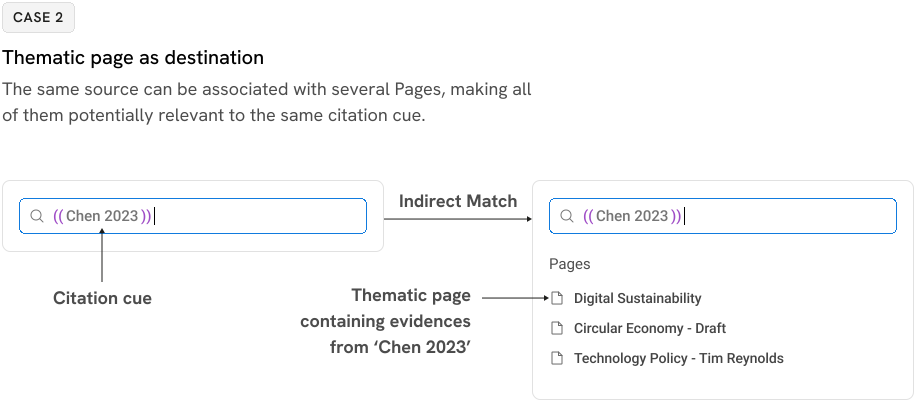
Here, Chen 2023 does not identify the destination Page. It identifies the source.
To return those thematic Pages, Search would have to move beyond matching the destination itself and follow:
source → evidence → Pages using that evidence
Because evidence from the same source could appear across several Pages, one citation cue could legitimately relate to multiple destinations. I could no longer assume that citation metadata uniquely identified the Page.
Here, Chen 2023 does not identify the destination Page. It identifies the source.
To return those thematic Pages, Search would have to move beyond matching the destination itself and follow:
source → evidence → Pages using that evidence
Because evidence from the same source could appear across several Pages, one citation cue could legitimately relate to multiple destinations. I could no longer assume that citation metadata uniquely identified the Page.
Here, Chen 2023 does not identify the destination Page. It identifies the source.
To return those thematic Pages, Search would have to move beyond matching the destination itself and follow:
source → evidence → Pages using that evidence
Because evidence from the same source could appear across several Pages, one citation cue could legitimately relate to multiple destinations. I could no longer assume that citation metadata uniquely identified the Page.
Reframing
Reframing
Reframing
I had started designing citation Search before defining what a citation query should actually return.
I had started designing citation Search before defining what a citation query should actually return.
The exploration also challenged my first recall model. A partial title, author or year could still be enough to Search, so I stopped treating Search, Suggested and All Location as fixed levels of memory.
The exploration also challenged my first recall model. A partial title, author or year could still be enough to Search, so I stopped treating Search, Suggested and All Location as fixed levels of memory.
The exploration also challenged my first recall model. A partial title, author or year could still be enough to Search, so I stopped treating Search, Suggested and All Location as fixed levels of memory.

Suggested destinations
Suggested destinations
Search worked when someone had something useful to type. The existing picker also surfaced Recently Used Pages as a recognition aid, but recency was not a reliable proxy for relevance to the evidence being captured.
Search worked when someone had something useful to type. The existing picker also surfaced Recently Used Pages as a recognition aid, but recency was not a reliable proxy for relevance to the evidence being captured.
Search worked when someone had something useful to type. The existing picker also surfaced Recently Used Pages as a recognition aid, but recency was not a reliable proxy for relevance to the evidence being captured.
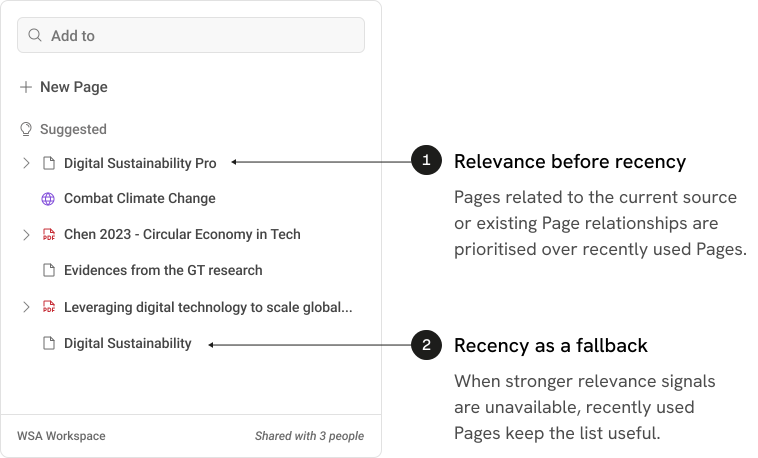
I explored using signals such as the current source and existing Page relationships to surface more relevant destinations first, with recency used when stronger contextual signals were unavailable.
I explored using signals such as the current source and existing Page relationships to surface more relevant destinations first, with recency used when stronger contextual signals were unavailable.
All Location
Suggested could surface likely destinations, but users still needed a way to reach any Page in the workspace.
Earlier in the case study, I had already identified that the existing hierarchy became harder to navigate as nesting increased. At this point, I brought that problem back into focus before exploring alternatives.
Suggested could surface likely destinations, but users still needed a way to reach any Page in the workspace.
Earlier in the case study, I had already identified that the existing hierarchy became harder to navigate as nesting increased. At this point, I brought that problem back into focus before exploring alternatives.
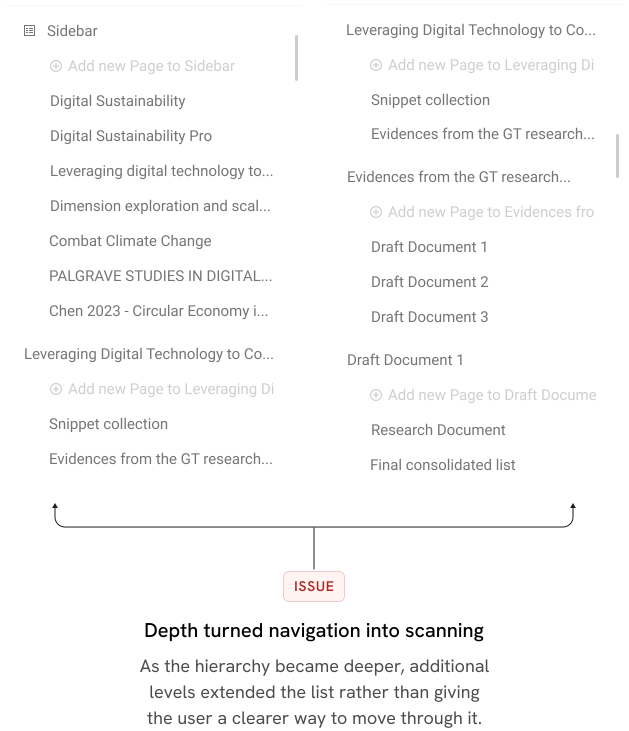
How could I make a deep hierarchy easier to navigate without removing the flexibility users already had?
How could I make a deep hierarchy easier to navigate without removing the flexibility users already had?
The Structural Constraint
The tool can contain deeply nested pages, but the sidebar does not provide persistent visibility of sub-pages created within documents. The destination picker therefore had to carry the structural complexity of the workspace within a small, temporary surface.
The tool can contain deeply nested pages, but the sidebar does not provide persistent visibility of sub-pages created within documents. The destination picker therefore had to carry the structural complexity of the workspace within a small, temporary surface.
Applying stress cases to the hierarchy
Key paths gave us the normal routing journeys but I needed to ensure the interaction model held up under difficult conditions. I defined specific stress cases such as workspaces where hundreds of pages exist across deeply nested structures. I explored several ways to make these deep structures easier to navigate and then pushed each approach against these stress cases to see where it broke.
Key paths gave us the normal routing journeys but I needed to ensure the interaction model held up under difficult conditions. I defined specific stress cases such as workspaces where hundreds of pages exist across deeply nested structures. I explored several ways to make these deep structures easier to navigate and then pushed each approach against these stress cases to see where it broke.
01–02 · Making the hierarchy clearer

I first focused on making parent and child relationships easier to read while keeping more of the structure visible. However, showing more of the hierarchy improved context, but deeper structures still increased scanning and visual density.
I first focused on making parent and child relationships easier to read while keeping more of the structure visible. However, showing more of the hierarchy improved context, but deeper structures still increased scanning and visual density.
03–04 · Containing the hierarchy

Next, I explored containing the structure through scrolling and more controlled navigation rather than allowing the list to keep expanding. Containing the hierarchy reduced its physical footprint, but shifted the effort into scrolling and keeping track of where the user was.
Next, I explored containing the structure through scrolling and more controlled navigation rather than allowing the list to keep expanding. Containing the hierarchy reduced its physical footprint, but shifted the effort into scrolling and keeping track of where the user was.
05–06 · Giving the hierarchy more room

I then tested whether additional width (5) and clearer separation between levels (6) would make deeper structures easier to traverse. More space improved legibility, but it did not remove the underlying problem. As depth increased, too much of the hierarchy still had to remain visible at once.
The Breakthrough: Navigate the Hierarchy on Demand
The explorations showed that the problem could not be solved by giving the hierarchy more space. Whether it scrolled vertically, expanded horizontally, or occupied a separate tab, deeper nesting still required users to navigate through structure they did not need to see.
The solution was to change how the hierarchy is revealed. Instead of expanding the entire tree inside the picker, I introduced contextual re-routing. Selecting a page or branch moves the user into that local context, temporarily replacing the broader hierarchy with only the destinations relevant to that branch.
A persistent breadcrumb keeps the user's position visible and provides a clear path back to the parent level.
The explorations showed that the problem could not be solved by giving the hierarchy more space. Whether it scrolled vertically, expanded horizontally, or occupied a separate tab, deeper nesting still required users to navigate through structure they did not need to see.
The solution was to change how the hierarchy is revealed. Instead of expanding the entire tree inside the picker, I introduced contextual re-routing. Selecting a page or branch moves the user into that local context, temporarily replacing the broader hierarchy with only the destinations relevant to that branch.
A persistent breadcrumb keeps the user's position visible and provides a clear path back to the parent level.
Try it!
A small detail with an important role:
Showing where a snippet is already linked gives researchers confidence before adding another destination, reducing accidental duplicate routing without interrupting the capture flow.
Final direction
Rather than simplifying the Page structure itself, I reduced how much of that complexity users had to deal with at each moment. The same picker could now support direct retrieval, recognition and deep structural navigation without forcing users into one method.
03/03 Organise and reuse
Routing solved where evidence could go. Reuse exposed what happened next.
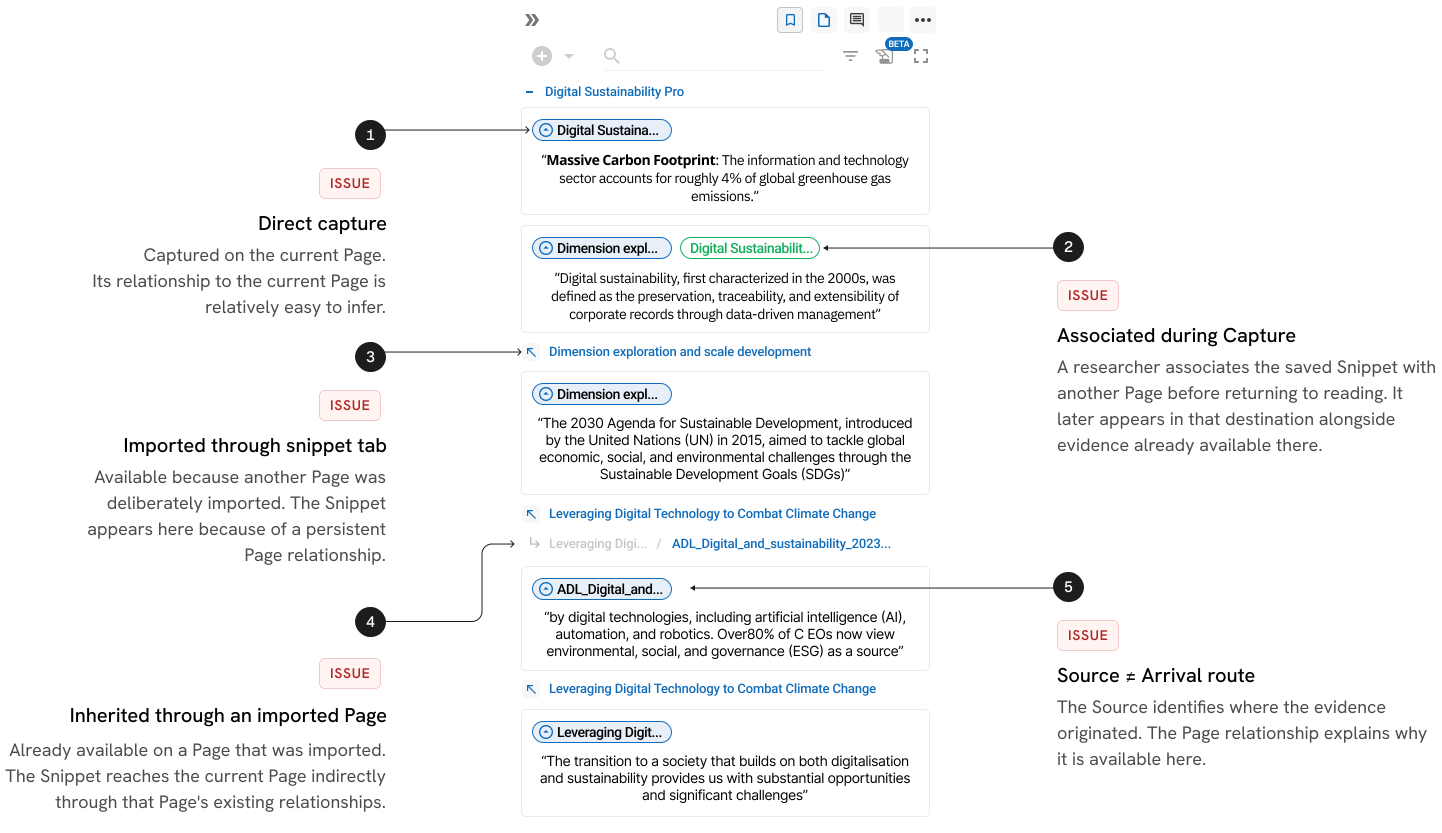
A Snippet could be captured from a Source, associated directly with another Page, inherited through Page structure or made available through a persistent Page Import. The same Snippet could also reach a Page through more than one valid route.
Those mechanisms behaved differently underneath, but once the evidence arrived, much of that distinction disappeared from the interface. The researcher was effectively being asked to understand the system in order to interpret the evidence.
One Snippet. Several valid routes.
First, I challenged the existing model before replacing it
I did not assume that the sidebar needed to be restructured. I first tested whether the existing model could become understandable through clearer explanation.
01
01
01
01
Helper text
Helper text
Helper text
Helper text
Clarify the option before commitment
Clarify the option before commitment
Clarify the option before commitment
Clarify the option before commitment
My first approach was the smallest intervention. I placed helper text beside the Import action, before the researcher committed to the relationship.
What it revealed
What it revealed
What it revealed
What it revealed
The explanation made the pathway clearer, but it was generic. It could explain what Import does, not what importing this particular Page would actually make available.

02
02
02
02
Tooltip
Tooltip
Tooltip
Tooltip
Explain unfamiliar relationships on demand
Explain unfamiliar relationships on demand
Explain unfamiliar relationships on demand
Explain unfamiliar relationships on demand
Contextual help reduced permanent instructional copy.
What it revealed
What it revealed
What it revealed
What it revealed
This reduced permanent explanatory copy, but shifted an important part of the model into memory. Once the tooltip disappeared, the sidebar still depended on the researcher remembering distinctions that were not clear from the structure itself.
03
03
03
03
Arrival badge
Arrival badge
Arrival badge
Arrival badge
State the relationship directly on the Snippet
State the relationship directly on the Snippet
State the relationship directly on the Snippet
State the relationship directly on the Snippet
The existing interface already encoded why evidence was available through Page headings, nesting, relationship icons, Source chips and Page associations. I tested whether that distributed information could be stated directly on the evidence.
What it revealed
What it revealed
What it revealed
What it revealed
This changed the relationship from implicit and distributed to explicit and local. It could answer why is this particular Snippet here?, but not how should I work with all of the evidence available here?
One piece of evidence can be reused across several Pages.
Annotations
INTENT Keep the arrival state visible on the evidence itself.
WHAT IT IMPROVES Makes direct, imported and inherited states easier to recognise.
WHAT IT REVEALED Item-level clarity does not resolve the organising logic of the evidence surface.
Reframing the problem
Reframing the problem
The first three explorations clarified the relationship model at different moments, but none helped the researcher evaluate the actual consequence of the decision before committing to it. And even if every Snippet stated its relationship explicitly, the evidence surface would still be organised around the system mechanics that brought it there.
The next question became: what should organise the evidence surface in the first place?
The first three explorations clarified the relationship model at different moments, but none helped the researcher evaluate the actual consequence of the decision before committing to it. And even if every Snippet stated its relationship explicitly, the evidence surface would still be organised around the system mechanics that brought it there.
The next question became: what should organise the evidence surface in the first place?
The first three explorations clarified the relationship model at different moments, but none helped the researcher evaluate the actual consequence of the decision before committing to it. And even if every Snippet stated its relationship explicitly, the evidence surface would still be organised around the system mechanics that brought it there.
The next question became: what should organise the evidence surface in the first place?
I then tested three competing organising principles
The earlier explorations made the system easier to explain, but they left the sidebar organised around the same underlying relationship mechanics.
I therefore explored three different organising principles. These were not successive versions of one idea, but competing hypotheses about what should dominate the evidence surface.
04
04
04
04
By Intent
By Intent
By Intent
By Intent
Separate evidence the researcher deliberately selected from evidence made available automatically. This made deliberate choice and system-driven availability visually distinct.
Trade-off
Trade-off
Trade-off
Trade-off
The distinction depended on position and treated automatic and deliberate evidence as stable categories, even though the same Snippet could matter through either route.
05
05
05
05
By Source
By Source
By Source
By Source
Group evidence around where it originally came from. This kept evidence from the same Source together even when it reached the Page through different routes.
Trade-off
Trade-off
Trade-off
Trade-off
Source explains where it came from, but not necessarily what it means in the current research context.
06
06
06
06
By Task
By Task
By Task
By Task
Change the evidence surface between broader exploration and focused writing. This allowed different information to become prominent depending on the immediate task.
Trade-off
Trade-off
Trade-off
Trade-off
Explicit modes assume exploration and writing can be separated cleanly, while those activities can overlap.
By this point, I had several credible interface directions. But none gave me a defensible reason to make that view permanent. Choosing one from the interface alone would have been a design preference rather than a product decision.
DESIGN QUESTION
DESIGN QUESTION
Which model continues to work when the researcher’s situation changes?
Which model continues to work when the researcher’s situation changes?
Which model continues to work when the researcher’s situation changes?
I needed a stronger basis for choosing between the six directions
The original usability study had not consistently reached deeper Organise and Reuse behaviour, so I could not use it alone to decide which direction should become the product model.
I combined two things I could establish more confidently that is how the platform actually made evidence available, and published research on how academics organise, retrieve, compare, verify, write with and return to evidence.
Rather than turn that work into another abstract framework, I used it to ask where the design problem genuinely changed. For example, the experience had to behave differently when:
The researcher did not yet know where evidence belonged
vs
When they were actively restructuring the evidence
When they needed a few specific Snippets while writing
vs
When they needed several pieces together to compare and synthesise
When they were working with recent material
vs
Returning much later with only partial memory of what they had collected.
The situations deliberately changed the parts of research work most likely to alter what the interface needed to support.
01
01
01
01
Exploring before the structure is clear
Exploring before the structure is clear
Exploring before the structure is clear
Exploring before the structure is clear
The researcher is preserving useful material while their understanding is still forming.
Needs to
Needs to
Needs to
Needs to
Capture evidence without being forced to decide its final organisation.
Stresses
Stresses
Stresses
Stresses
Uncertainty and deferred organisation.
02
02
02
02
Building structure while understanding develops
Building structure while understanding develops
Building structure while understanding develops
Building structure while understanding develops
The researcher is preserving useful material while their understanding is still forming.
Needs to
Needs to
Needs to
Needs to
Capture evidence without being forced to decide its final organisation.
Stresses
Stresses
Stresses
Stresses
Uncertainty and deferred organisation.
01
01
01
01
Exploring before the structure is clear
Exploring before the structure is clear
Exploring before the structure is clear
Exploring before the structure is clear
The researcher is preserving useful material while their understanding is still forming.
Needs to
Needs to
Needs to
Needs to
Capture evidence without being forced to decide its final organisation.
Stresses
Stresses
Stresses
Stresses
Uncertainty and deferred organisation.
01
01
01
01
Exploring before the structure is clear
Exploring before the structure is clear
Exploring before the structure is clear
Exploring before the structure is clear
The researcher is preserving useful material while their understanding is still forming.
Needs to
Needs to
Needs to
Needs to
Capture evidence without being forced to decide its final organisation.
Stresses
Stresses
Stresses
Stresses
Uncertainty and deferred organisation.
01
01
01
01
Exploring before the structure is clear
Exploring before the structure is clear
Exploring before the structure is clear
Exploring before the structure is clear
The researcher is preserving useful material while their understanding is still forming.
Needs to
Needs to
Needs to
Needs to
Capture evidence without being forced to decide its final organisation.
Stresses
Stresses
Stresses
Stresses
Uncertainty and deferred organisation.
Writing exposes a new evidence need
One design scenario exposed the limits of the earlier organising models particularly clearly. Someone is already writing when they reach a claim they cannot adequately support. They remember having captured something relevant, but perhaps only the author, a phrase, the topic or simply the idea itself.
At that moment, their goal is not to manage a Page relationship.
Find the strongest relevant evidence for the argument I am making now, inspect enough context to trust it, use what I need, and return to writing.
Find the strongest relevant evidence for the argument I am making now, inspect enough context to trust it, use what I need, and return to writing.
Find the strongest relevant evidence for the argument I am making now, inspect enough context to trust it, use what I need, and return to writing.
Breaking down the scenario
01
01
01
01
Behaviour
Behaviour
Behaviour
Behaviour
The researcher may need to return to previously captured evidence while the argument is still forming, rather than completing research first and writing afterwards.
The researcher may need to return to previously captured evidence while the argument is still forming, rather than completing research first and writing afterwards.
The researcher may need to return to previously captured evidence while the argument is still forming, rather than completing research first and writing afterwards.
The researcher may need to return to previously captured evidence while the argument is still forming, rather than completing research first and writing afterwards.
02
02
02
02
Cognitive demands
Cognitive demands
Cognitive demands
Cognitive demands
Work from incomplete recall
Recognise promising evidence among alternatives
Compare several Snippets
Check where each piece came from
Inspect the original context
Choose only what supports the current argument
Understand whether using it changes their research organisation
Return to writing without reconstructing the system first
Work from incomplete recall
Recognise promising evidence among alternatives
Compare several Snippets
Check where each piece came from
Inspect the original context
Choose only what supports the current argument
Understand whether using it changes their research organisation
Return to writing without reconstructing the system first
Work from incomplete recall
Recognise promising evidence among alternatives
Compare several Snippets
Check where each piece came from
Inspect the original context
Choose only what supports the current argument
Understand whether using it changes their research organisation
Return to writing without reconstructing the system first
Work from incomplete recall
Recognise promising evidence among alternatives
Compare several Snippets
Check where each piece came from
Inspect the original context
Choose only what supports the current argument
Understand whether using it changes their research organisation
Return to writing without reconstructing the system first
03
03
03
03
Scenario
Scenario
Scenario
Scenario
Unsupported claim ──► find candidate evidence ──► compare and verify ──► choose the useful subset ──► use it in the argument ──► continue writing
Unsupported claim ──► find candidate evidence ──► compare and verify ──► choose the useful subset ──► use it in the argument ──► continue writing
Unsupported claim ──► find candidate evidence ──► compare and verify ──► choose the useful subset ──► use it in the argument ──► continue writing
What this changed
What this changed
What this changed
What this changed
Retrieval should begin from the researcher’s information need, not from Page mechanics.
Retrieval should begin from the researcher’s information need, not from Page mechanics.
Finding evidence and permanently organising evidence are different activities.
Finding evidence and permanently organising evidence are different activities.
The researcher needs a temporary selection state between “found” and “used”.
The researcher needs a temporary selection state between “found” and “used”.
The same problem looked different in other research situations
The earlier concepts still started from the same question: how should the sidebar be organised?
The scenario work shifted that question. Instead of beginning with Pages, imports or inheritance, I started with what someone needed to do with the evidence in front of them:
See what I have ──► narrow it down ──► select what matters ──► decide what to do with it
See what I have ──► narrow it down ──► select what matters ──► decide what to do with it
See what I have ──► narrow it down ──► select what matters ──► decide what to do with it
That separated two concerns that had previously been mixed together. The evidence view could focus on what someone could use, while Page relationships could explain why that evidence was available and what would happen if the relationship changed.
01
01
01
01
Organisation can change
Organisation can change
Organisation can change
Organisation can change
Evidence could support more than one idea, while themes and Page relationships could change as the work developed.
Evidence could support more than one idea, while themes and Page relationships could change as the work developed.
Evidence could support more than one idea, while themes and Page relationships could change as the work developed.
Evidence could support more than one idea, while themes and Page relationships could change as the work developed.
02
02
02
02
Collection ≠ selection
Collection ≠ selection
Collection ≠ selection
Collection ≠ selection
Making an entire Page of evidence available was different from choosing only the few Snippets needed for the task at hand.
Making an entire Page of evidence available was different from choosing only the few Snippets needed for the task at hand.
Making an entire Page of evidence available was different from choosing only the few Snippets needed for the task at hand.
Making an entire Page of evidence available was different from choosing only the few Snippets needed for the task at hand.
03
03
03
03
Source ≠ meaning
Source ≠ meaning
Source ≠ meaning
Source ≠ meaning
The Source answered where the evidence came from. Research structure answered what it related to in the current work
The Source answered where the evidence came from. Research structure answered what it related to in the current work
The Source answered where the evidence came from. Research structure answered what it related to in the current work
The Source answered where the evidence came from. Research structure answered what it related to in the current work